
A Note on Tradition
This essay was first published on our blog in January 2024. It serves as an introduction to our central philosophical text, The Essence of Non-Duality.
In Samkhya philosophy and Homeric literature, it is a tradition to begin any serious writing with a dedication to the Gods. Dont acte, as the French say—”let it be so recorded.”
I also take this occasion to honor Poetry and poets, who are, no less than philosophers, artists of the real.
Should poets write dedications today, or is it an outdated practice, a relic of the past, an archaism? The answer does not revolve around their perceived obsolescence. These ancient texts, enriched with dedications, have transcended time, becoming literary and spiritual canons. Those of us fortunate enough to have received an education in classical and religious literature still marvel at them.
Exordium, Invocation & Panegyric
Praises and Salutations to You, Ô, Fortunate and Knowledgeable Reader!
In the Yogic philosophical tradition, to which I align, writers aspiring to unveil Truth and enrich divine literature initiate their work with a preamble that invokes and acknowledges divine inspiration.
Eastern & Western Origins
This invocation tradition traces its roots back to the earliest documented literary texts of humanity, dating as far back as the 3rd century BC, exemplified by Enheduanna (2334-2219 BC), a Sumerian priestess, poetess, and princess credited as the first author of a written piece, The Exaltation of Inanna.
Known as “exordia” in ancient Roman rhetoric (mostly borrowed from Hellenistic culture), these dedications were epic in style and introduced the subject matter to be debated. In Homeric poetry, the dedicatory passages were invocations to the gods and meant to be auspicious and to propitiate, that is, to please the Gods, ensure a divine inspiration throughout the writing process and favorable outcome of the literary piece among humans. Invocations were often performative, as poets anticipated not only that their work would find favor with the Muses but, more significantly, that the divine Muses, custodians of both concealed and disclosed Relative and Supreme Knowledge, would steer their work and speak through them.

Declare, O Muse! in what ill-fated hour
Sprung the fierce strife, from what offended power
Latona’s son a dire contagion spread,
And heap’d the camp with mountains of the dead;
The king of men his reverent priest defied,
And for the king’s offence the people died.
Example of invocation in performative speech (“Declare, O Muse!”) from The Iliad of Homer (8-7th century. Translated by Alexander Pope in the 19th century – Book I)
Invocations are common in Vedic literature, a vast corpus that spans beyond the Four Vedas, as the Hymn to Indra and The Maruts (Storm Gods) of the Rig Veda (Mandala 1, Sûkta 6) attests. Beyond propitiation and inspiration, the invocations were a dedication, an offering to the Deity, therefore lavish and panegyric in nature.
Should poets write dedications today, or is it an outdated practice, a relic of the past, an archaism? The answer does not revolve around their perceived obsolescence. These ancient texts, enriched with dedications, have transcended time, becoming literary and spiritual canons. Those of us fortunate enough to have received an education in classical and religious literature still marvel at them.
Contemplative individuals have discovered that the Vedas are literally life-changing. Aspiring writers, in turn, draw inspiration from Sumerian literature, Homeric poetry, and global mythologies as guides for emulation. These works encapsulate timeless wisdom—rich, dynamic, and enlightening—stretching across millennia. So, the question isn’t about obsolescence, rather intention.
Why I Write. Why Do You Write?
I believe that writing serves Knowledge. Writing should help dissipate falsehood, distinguish truth, discern the pursuit of the worthy from the trivial, and separate the elevating, where Harmony resides, from the mundane. In essence, when needed (yes, not everything needs to be written about), writing should act as a dispeller of ignorance. From a mystic’s standpoint, this involves an act of union with the divine, reaching its pinnacle when the author fades into the background, allowing the subject to take center stage.
Also, crafting a refined dedication for your audience, as a writer, demonstrates respect, reverence, and oneness with them. While I don’t advocate for continuous publication of invocations, I’ve observed that when I neglect to honor the Divine, along with my knowledgeable peers and audience in poetry and art, my writing, regardless of the subject, becomes uneasy, accident-prone, difficult, and lacks creative joy. I’ve also experienced that potent invocations reside in the secrecy of the human heart.
Etiquette, I find, is delightful—a necessity in Fine Arts, also a sign of good taste, perhaps a remnant of my French Self. The dedication below, born in a moment of creative joy and clarity, is an exception that I share for its power of inspiration, and to honor the codes of classical and Yogic literature. This poem introduces The Essence of Non-Duality: A Gateway to Spiritual Harmony and Artistic Elevation—our foundational philosophy piece, which we recommend you read and ponder over, as new chapters are made available by the author. It is also the overdue dedication for the creation of Revue {R}évolution since 2019.
It’s never too late to make amends.
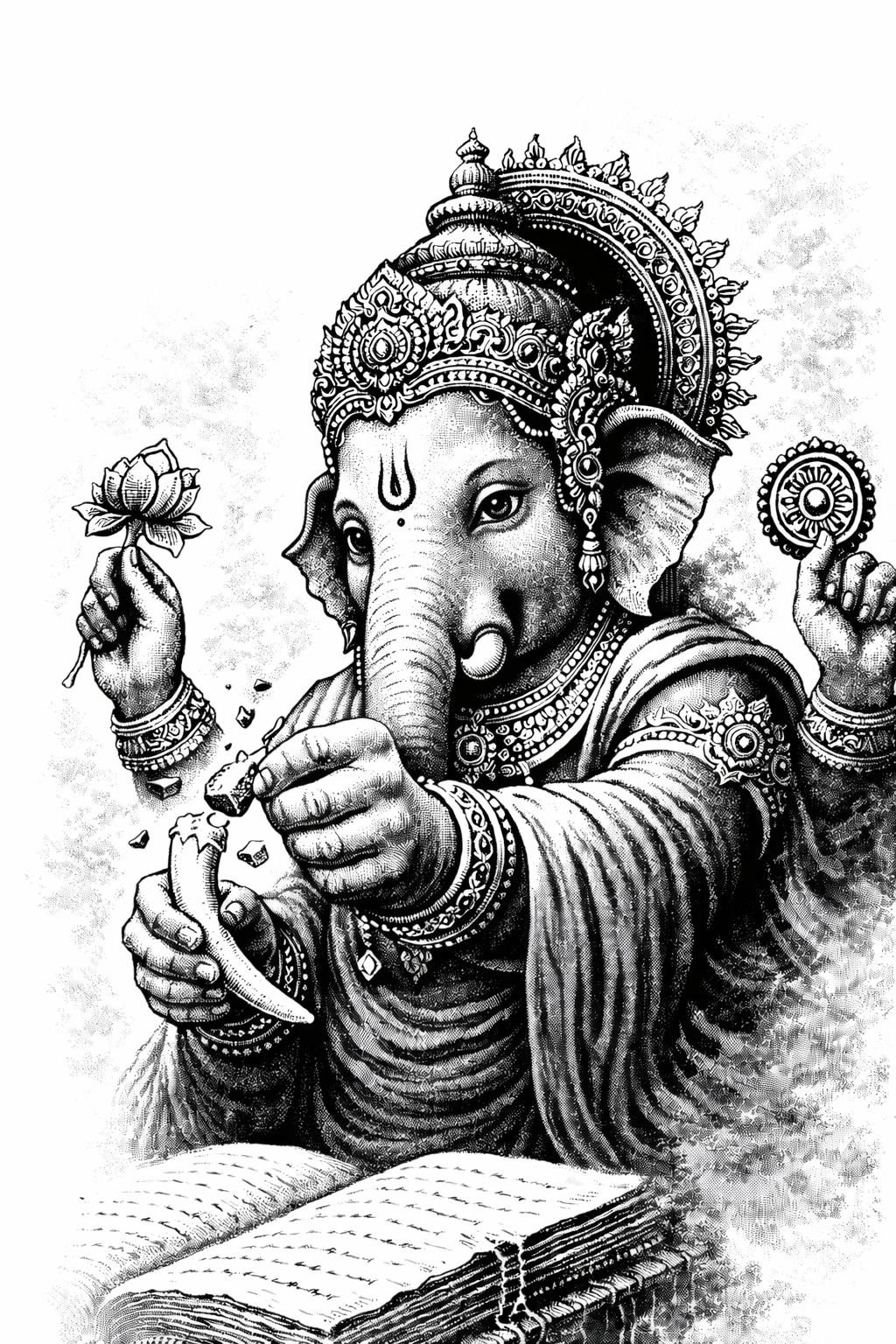
Hail to Lord Ganesha within,
Divine forebear of poets and wordsmiths,
Bold embodiment of Intelligence Extreme,
King of the astral unconscious, breaker of limits
I bow to you.
Hail to Mahakali within,
The Goddess with many a name, tongue unleashed
Sharada, Lakshmi, fervor in sublime speech.
Ô, Adishakti, delight of spirit, mind, and matter, exquisite!
I bow to you.
Hail to the Remover of Ignorance within,
Beyond religion divide—Brahma, Vishnu, Shiva, beloved Guru.
Para Brahman, glorious Self ever pristine,
Salvaging Dharma, absolute Understanding & the Truth
I bow to you.
Divine fragrance, mellifluous voices of the Guru within,
Hail to the Saints, speakers of poetry and wisdom,
Companions, sisters, brothers, and parangon of Discipline
The humbled aspirant, disciple, and enamored student
Bows to you.
Masters of language, adornments of Mahalakshmi within,
Hail to the Great Poets, infusing life into many arts
Unveiling the sacred path in plain sight hiding
Para Vac, tongue sovereign, in their throat resides
I bow to you.
Muses in earthly forms, beloved of Saraswati Maa within,
Hail to the Great Artists, siblings great poets cherished
Gandharvas and apsaras, conduits of beauty divine!
Singing celestial praises in humility, sight and sound,
I bow to you.
Masters of Logic and beyond, perfecting Culture within
Hail to the Great Philosophers, what more can be said?
Refined beings, scholars, mystics, poets, Sannyasins
This humble ode before your harmonious intellect paled.
I bow to you.
May these words be an offering of light to your light within
Carriers of the divine word, fortunate in eloquent attention
Hail to the Readers, devoted truth seekers, listening
Ô, God in form of knowledgeable audience
I bow to you.
The poet apologizes to All, worthy of praise,
And invokes Mahakali’s power, supreme and loving
For any inadvertent mistake this work may raise
–May She rectify any shortcoming!
Murielle Mobengo
Leave a Reply